Description
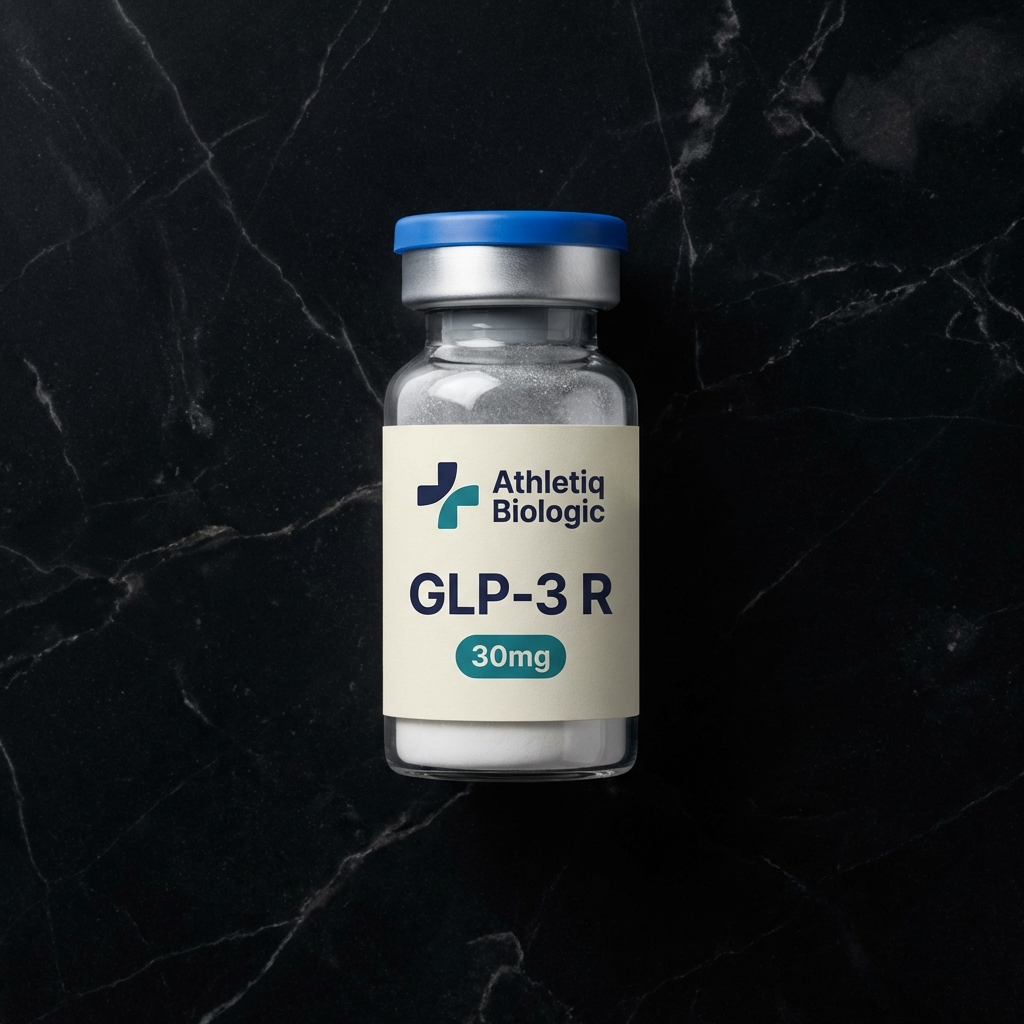
GLP-3 R Peptide (Triple-Pathway Agonist)
Batch Specific COA Download | COA Results Pending
GLP-3 R Peptide is a first-in-class triple-receptor agonist that simultaneously engages the GLP-1, GIP, and Glucagon receptors, representing the current frontier of metabolic research. Specifically, it was engineered to go beyond the dual-incretin ceiling and recruit the Glucagon receptor as a third, independent axis of metabolic action. Therefore, it produces the most comprehensive and multi-layered metabolic response currently available in this class of peptide research compounds. We offer this ultra-pure compound for advanced investigators who have established baselines with single and dual-pathway agonists and are now probing the upper boundaries of receptor co-stimulation. Currently, it sits at the apex of the GLP receptor agonist hierarchy. So, it is the definitive tool for studying what happens when all three metabolic receptors are driven in concert. Thus, no other single compound in this category unlocks the same breadth of simultaneous receptor activity.
How It Works
GLP-3 R Peptide functions as a “three-engine metabolic system,” where each receptor pathway adds a distinct and compounding layer of metabolic effect. First, the GLP-1 component provides the precision glucose-lowering and appetite-suppressing foundation: glucose-dependent insulin secretion, glucagon suppression in the context of GLP-1 signaling, and engagement of the gastric brake to slow nutrient delivery and signal satiety centers. This layer alone mirrors the effect seen with GLP-1 S, but it is only the beginning. Then, the GIP component activates its receptor in adipose tissue and the pancreas, producing the additive insulin secretion amplification and fat-tissue signaling effects established in the dual-agonist GLP-2 T. This raises the metabolic ceiling significantly above single-pathway agonism. Finally, the Glucagon receptor component introduces a fundamentally different mechanism: direct hepatic energy expenditure stimulation. The Glucagon signal drives the liver to increase lipid oxidation and thermogenic output, a pathway that neither GLP-1 nor GIP alone can adequately recruit. Consequently, the research model experiences not just reduced caloric intake and improved glycemic control, but also an active increase in energy expenditure — meaning the model burns more energy even at rest. As a result, the compound drives a three-vector metabolic shift: reduced hunger, tighter glucose regulation, and amplified fat oxidation occurring simultaneously. This is the defining characteristic that separates GLP-3 R from its dual-pathway predecessor.
Lab Uses
Advanced labs use GLP-3 R Peptide as the gold standard compound for comprehensive metabolic modeling when the research objective requires the broadest possible receptor engagement. It is the primary tool for studying the hepatic glucagon axis in the context of co-stimulated incretin signaling, particularly for understanding how direct liver energy expenditure enhances the weight and fat-loss outcomes observed in dual-agonist models. Additionally, investigators use it to study the effect of Glucagon receptor activation on brown adipose tissue thermogenesis, a mechanistic area that is impossible to probe with GLP-1 or GIP agonism alone. It is also increasingly used in studies examining the interplay between increased energy expenditure and lean mass preservation, as the compound’s multi-pathway design may create conditions where fat oxidation is prioritized over muscle protein catabolism in the research model.
Synergistic Pairing: BPC-157 for Advanced Protocol Stability
At this level of receptor engagement, the BPC-157 pairing becomes especially important for longer research protocols. GLP-3 R Peptide’s Glucagon component increases hepatic and systemic metabolic activity significantly, and over extended timelines, maintaining the cytoprotective and tissue-stabilizing support of BPC-157 helps ensure the gastrointestinal and hepatic environment remains intact throughout the study. This combination allows investigators to study the full depth of triple-receptor agonism without introducing confounding variables from compound-related tissue stress.
Technical Specs
We ship this as a specialized lyophilized powder to ensure maximum peptide stability during transit.
Name: GLP-3 R Peptide
Scientific Alias: Retatrutide
Receptor Targets: GLP-1R + GIPR + Glucagon Receptor (Triple Agonist)
Purity: ≥99% (HPLC Verified)
Format: Lyophilized Powder
Storage: Freeze at -20°C for long-term stability.
Reference Data
Pubmed: Triple-hormone-receptor agonist retatrutide for obesity — a Phase 2 Trial
Research Use Only Warning
We sell this strictly for lab research. No Human Use: Do not use this GLP-3 R Peptide as a weight loss drug or medication. No Injections: It is not for personal medical use or human administration. Expert Use: Only trained staff and qualified investigators should handle this compound.


Reviews
There are no reviews yet.