Description
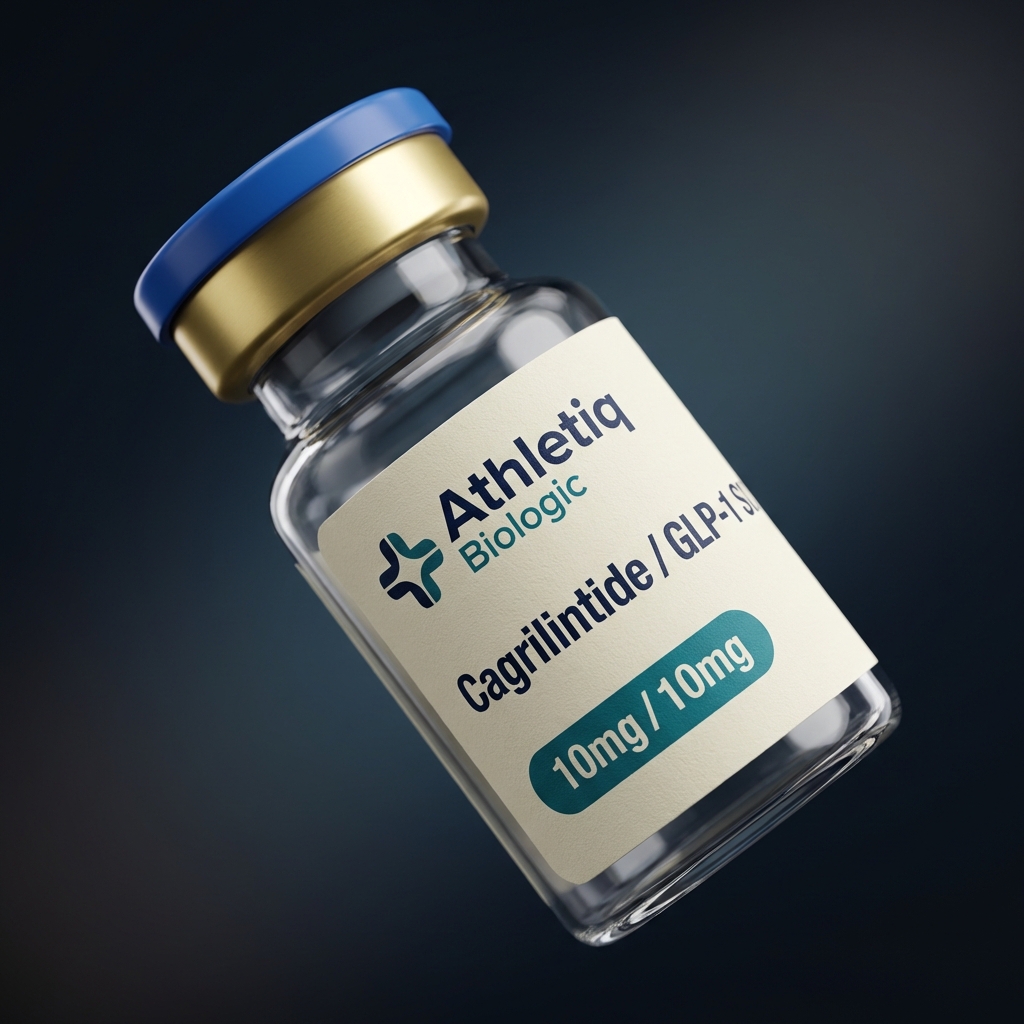
Cagrilintide / GLP-1 S Blend (Amylin + GLP-1 Dual-Pathway Protocol)
Batch Specific COA Download | COA Results Pending
The Cagrilintide / GLP-1 S Blend is a novel dual-peptide formulation that combines two mechanistically distinct satiety and metabolic pathways into a single research protocol: a long-acting amylin analog (Cagrilintide) and a high-affinity GLP-1 receptor agonist (GLP-1 S / Semaglutide). Specifically, this combination was designed to address the fundamental limitation of GLP-1 agonism in isolation: the amylin pathway operates through a completely separate neural and hormonal axis, meaning the two compounds do not compete for the same receptors. Therefore, the blend creates a multi-origin satiety signal that engages both the hindbrain amylin circuits and the GLP-1 receptor networks simultaneously. We offer this precisely co-formulated vial for investigators studying the additive effects of co-stimulated satiety pathways on body composition, appetite behavior, and metabolic rate. Currently, the Cagrilintide plus semaglutide combination — known in clinical literature as CagriSema — represents one of the most compelling dual-pathway approaches to obesity research, having demonstrated efficacy outcomes that significantly exceed either compound alone. So, labs use this blend to probe whether the amylin-plus-incretin co-signaling effect is additive, synergistic, or complementary. Thus, it is the next logical step for research programs that have already characterized the individual GLP-1 pathway.
How It Works
This blend operates through what researchers describe as a “convergent satiety” model, where two independent hormonal systems arrive at the same physiological destination — reduced appetite and improved body composition — via completely separate routes. First, the GLP-1 S component activates the GLP-1 receptors in the pancreas and brain, driving glucose-dependent insulin secretion, glucagon suppression, gastric slowing, and hypothalamic satiety signaling. This establishes the foundational incretin effect: the research model experiences tighter glycemic control and a reduced drive to consume. This is the single-pathway baseline. Then, the Cagrilintide component engages the amylin receptor system, which operates in the hindbrain (area postrema) and hypothalamus via a pathway that is neuroanatomically distinct from the GLP-1 axis. Amylin signaling suppresses appetite through a fundamentally different mechanism: it reduces meal size, slows gastric emptying from its own receptor pathway, and modulates the brain’s reward valuation of food. Consequently, the research model receives two simultaneous but non-competing satiety signals from independent hormonal systems. As a result, the combined appetite-suppressing and metabolic effect exceeds what either pathway delivers alone. Furthermore, because the two compounds work through independent receptors, the body does not appear to down-regulate one pathway when the other is active, which is a key mechanistic advantage researchers are actively studying. The result is a research model that shows shifts in both the homeostatic drive to eat (GLP-1 axis) and the hedonic and behavioral motivation to eat (amylin axis) — a dual-front approach to energy intake modulation.
Lab Uses
This blend is the primary tool for labs investigating whether amylin and GLP-1 co-stimulation produces a genuinely additive satiety effect or a synergistic one, a distinction with profound implications for understanding metabolic signaling architecture. Investigators also use it in body composition studies focused on lean mass preservation versus fat mass reduction, as early clinical data suggests the combination may produce superior fat-specific outcomes compared to GLP-1 agonism alone. Additionally, it is used in studies examining the interplay between the peripheral incretin signal (pancreas, gut) and the central amylin signal (hindbrain, hypothalamus), providing a window into how multi-origin hormonal inputs are integrated by the brain into a unified behavioral response. It is also valuable for research programs mapping the amylin receptor system’s independent role in glucose homeostasis, separate from the incretin effect.
Synergistic Add-On: GLP-3 R for Comprehensive Coverage
For advanced labs, pairing this blend protocol with GLP-3 R Peptide in a separate arm of the study creates a multi-arm comparison that covers the full spectrum of next-generation metabolic receptor targets: amylin, GLP-1, GIP, and Glucagon. This allows investigators to directly compare the amylin co-stimulation approach versus the triple incretin approach and characterize precisely which receptor combination produces specific metabolic phenotypes.
Technical Specs
We ship this as a co-formulated lyophilized powder in a single vial to ensure consistent dosing ratios and maximum peptide stability during transit.
Name: Cagrilintide / GLP-1 S Blend
Components: Cagrilintide (Amylin Analog) + Semaglutide (GLP-1 Receptor Agonist)
Receptor Targets: Amylin Receptors (AMY1, AMY2, AMY3) + GLP-1R
Purity: ≥99% per component (HPLC Verified)
Format: Co-Lyophilized Powder
Storage: Freeze at -20°C for long-term stability.
Reference Data
Pubmed: Combining GLP-1 receptor agonism and amylin analog activity — CagriSema Phase 2 Data
Research Use Only Warning
We sell this strictly for lab research. No Human Use: Do not use this Cagrilintide / GLP-1 S Blend as a weight loss protocol or medication. No Injections: It is not for personal medical use or human administration. Expert Use: Only trained staff and qualified investigators should handle this compound.
Reviews
There are no reviews yet.