Description
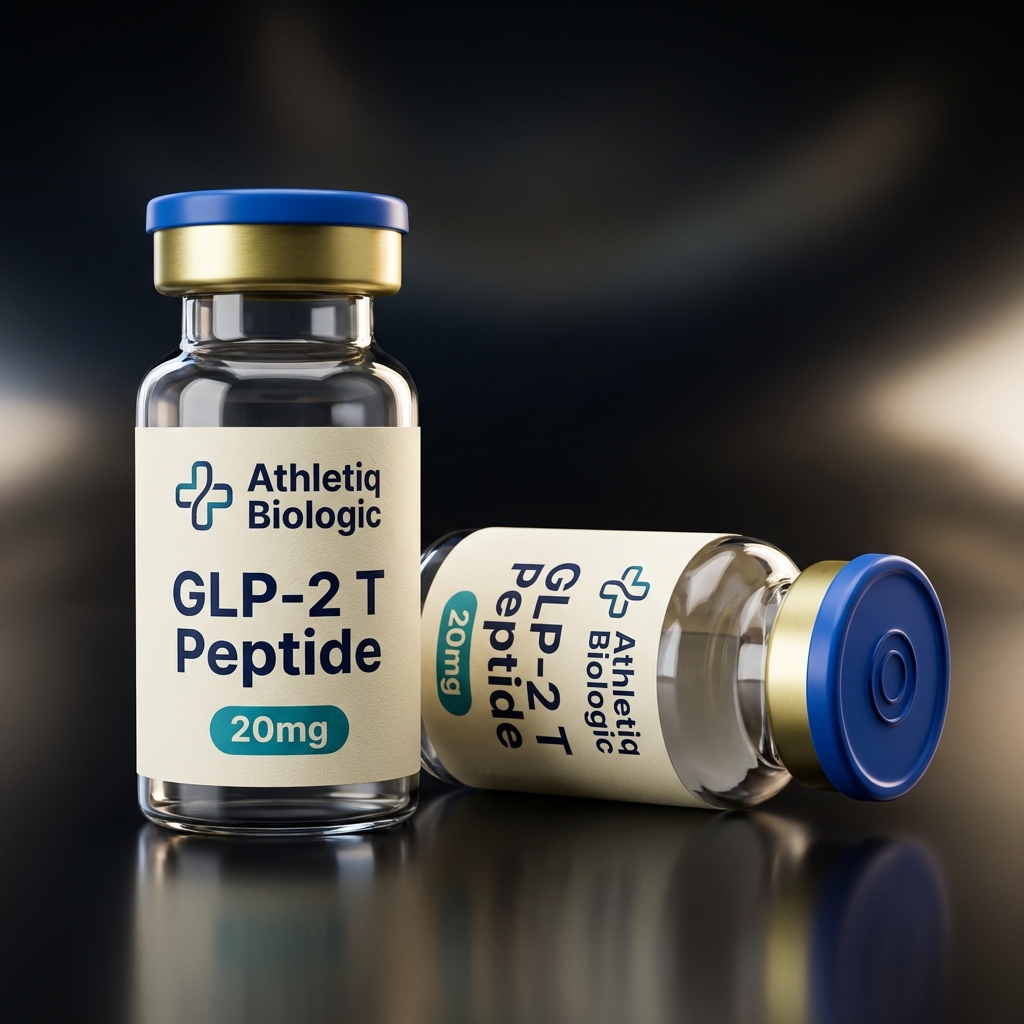
GLP-2 T Peptide (Dual-Pathway Agonist)
Batch Specific COA Download | COA Results Pending
GLP-2 T Peptide is a precision-engineered dual-incretin analog that simultaneously engages both the GLP-1 and GIP receptors, representing the next evolution in metabolic research beyond single-pathway agonism. Specifically, it was designed to address the recognized ceiling of isolated GLP-1 stimulation, leveraging the additive and synergistic effects of combined incretin signaling. Therefore, it produces a significantly more robust metabolic response in research models, particularly in the context of adipose tissue dynamics and glycemic regulation. We offer this high-purity compound for investigators who have moved past the baseline established by GLP-1 agonists alone and require a more potent, multi-receptor toolkit. Currently, it represents the dual-agonist benchmark in metabolic research and serves as the middle tier in the GLP receptor hierarchy. So, labs use it to study how incretin co-stimulation amplifies outcomes versus single-receptor activation. Thus, it is the critical link between isolated GLP-1 studies and full triple-receptor research protocols.
How It Works
This compound functions as a “dual-throttle” on the metabolic system, operating through two distinct but complementary pathways simultaneously. First, the GLP-1 component activates pancreatic beta cells to enhance glucose-dependent insulin secretion and suppress glucagon, establishing tight glycemic control. This creates the same precision signaling environment seen with GLP-1 S, but this is only the first layer. Then, the GIP component engages its own receptor, which is primarily expressed in adipose tissue and the pancreas. The GIP signal works synergistically with the GLP-1 signal to dramatically amplify insulin secretion above what either pathway can achieve alone. Consequently, the research model demonstrates a glucose-lowering response that exceeds single-agonist benchmarks by a measurable margin. Furthermore, the GIP pathway signals adipocytes differently than GLP-1, influencing fat storage and mobilization in ways that the single-pathway agonist cannot replicate. As a result, the research model shows a combined reduction in both glycemic load and adipose accumulation, giving investigators a window into the mechanics of dual incretin synergy. Unlike GLP-1 S, the co-engagement of the GIP receptor also appears to attenuate the nausea and gastric effects that can complicate single-pathway GLP-1 research models, suggesting a distinct tolerability profile worth studying.
Lab Uses
Labs primarily use GLP-2 T Peptide for comparative metabolic studies where the objective is to directly measure the additive effect of GIP co-stimulation on top of a GLP-1 baseline. This is indispensable for understanding why dual-agonism produces superior outcomes in obesity and T2D research models. Additionally, investigators use it to study the GIP receptor’s distinct role in adipogenesis and lipid metabolism, isolating the fat-tissue effects that are unique to this pathway. It is also a critical tool for studying the CNS reward pathways associated with GIP receptor activity in the brain, particularly the dopaminergic circuits linked to food-seeking behavior. Research models have shown shifts not just in appetite volume, but in the hedonic drive to eat, a dimension that GLP-1 S alone does not fully address.
Synergistic Pairing: BPC-157 for Metabolic Integrity
This compound pairs strongly with BPC-157 in long-duration metabolic studies. As GLP-2 T Peptide drives more aggressive metabolic modulation than its single-pathway predecessor, the added cytoprotective and gut-stabilizing properties of BPC-157 help maintain the integrity of the gastrointestinal environment in the research model. This pairing is particularly relevant in extended studies where sustained dual-incretin stimulation may otherwise introduce localized mucosal stress. The result is a more stable research environment, allowing for cleaner long-term data collection.
Technical Specs
We ship this as a specialized lyophilized powder to ensure maximum peptide stability during transit.
Name: GLP-2 T Peptide
Scientific Alias: Tirzepatide
Receptor Targets: GLP-1R + GIPR (Dual Agonist)
Purity: ≥99% (HPLC Verified)
Format: Lyophilized Powder
Storage: Freeze at -20°C for long-term stability.
Reference Data
Pubmed: Tirzepatide once weekly for the treatment of obesity — SURMOUNT-1 Trial
Research Use Only Warning
We sell this strictly for lab research. No Human Use: Do not use this GLP-2 T Peptide as a weight loss drug or medication. No Injections: It is not for personal medical use or human administration. Expert Use: Only trained staff and qualified investigators should handle this compound.

Reviews
There are no reviews yet.